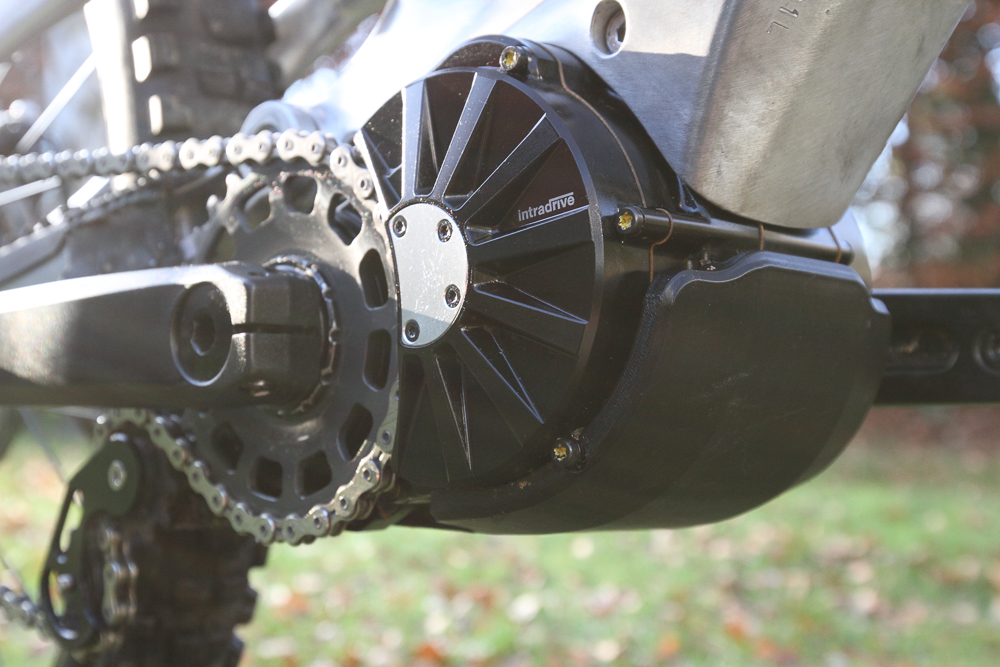
For decades, the humble derailleur has been the undisputed king of bicycle gearing. That intricate dance of chain and sprockets, with a flimsy cage hanging precariously in the breeze, has been the standard for everything from road bikes to mountain bikes. But what if there was a better way?
Enter the gearbox. A technology once reserved for high-end automotive and industrial applications is now making its way to the world of two wheels, and it is set to revolutionise how we ride. While the traditional derailleur drivetrain has its place, new gearbox technology offers a range of compelling advantages that are hard to ignore.
So, why are gearboxes on bikes gaining traction? Let's break it down.
1. Durability and protection
The most obvious weakness of a derailleur drivetrain is its vulnerability. The rear derailleur, cassette and chain are all exposed to the elements. Mud, grit, rocks and sticks all conspire to wear down your components, clog up your shifting and, in the worst case, snap your derailleur right off.
A gearbox, however, encloses all the gears and shifting mechanisms in a sealed, weatherproof unit, usually located at the bottom bracket. The sensitive moving parts are protected from all the abuse the trail or road can throw at them. The result is far less maintenance, longer service intervals, and a system that performs in all conditions, from a dusty trail to a muddy slog.
2. A cleaner, quieter ride
If you've ever ridden a bike with a gearbox, one of the first things you'll notice is the silence. Gone is the chain slap and the rattling of the derailleur. With the chainline staying straight and the entire transmission enclosed, your ride becomes noticeably quieter.
Gearboxes also allow a belt drive instead of a chain. Carbon-reinforced belts are clean, durable and need no lubrication, so you can say goodbye to greasy trouser legs and constant chain cleaning.
3. Shift on the spot, any time
With a derailleur drivetrain, you have to be pedalling to shift. That is a real disadvantage in technical terrain or stop-start city riding. Ever come to a stop at a red light in a hard gear and struggled to get going again? A gearbox solves this. Because the freewheel is inside the gearbox, you can shift while coasting or at a standstill. You can drop several speeds in an instant as you approach a sudden climb, or pick the right speed before the light turns green.
4. Better weight distribution and suspension performance
On a derailleur bike, a significant amount of weight, the derailleur, cassette and part of the chain, sits on the rear wheel as "unsprung mass". Reducing this weight is a key goal for high-performance bikes, because it lets the suspension react more quickly to bumps.
Moving the gearing into a gearbox at the bottom bracket centralises and lowers the weight. This improves balance and handling and reduces unsprung mass at the rear wheel, giving more sensitive suspension, better traction and a smoother ride over rough terrain.
Are gearboxes for everyone?
Gearbox technology has trade-offs. Systems currently cost more than a derailleur drivetrain and can add some weight, though it sits in a more advantageous place. A frame also needs to be designed to accept a gearbox.
As the technology becomes more popular, we can expect prices to come down and more frames to be designed around gearboxes. For riders who prioritise reliability, low maintenance and a better riding experience, the new generation of gearbox technology is a logical step forward, proof that the bicycle, a machine over 200 years old, is still evolving.
.png)